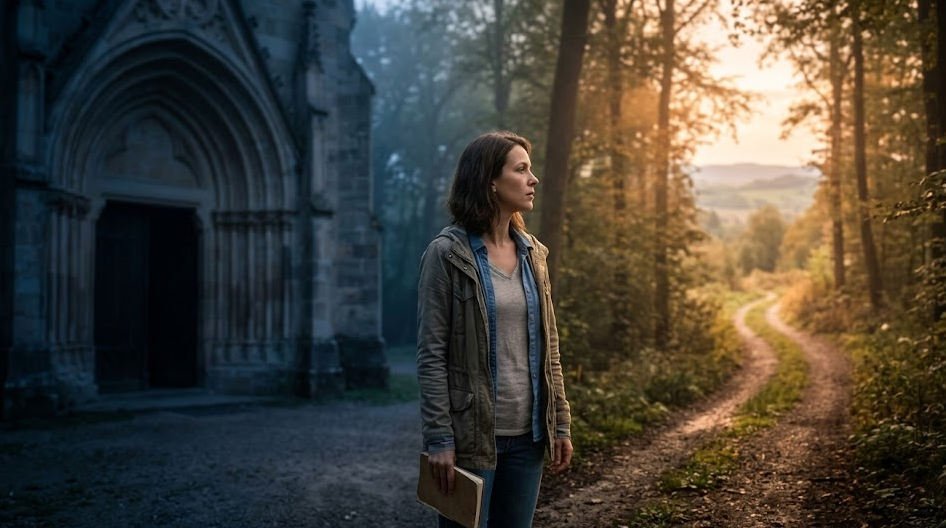
In the modern era, a significant demographic shift is occurring across the globe. Many individuals who previously identified with traditional religious institutions are now stepping away. These people, often referred to as The Unchurched, are not necessarily abandoning their faith. Instead, they are seeking more personal and authentic ways to connect with the divine.
The transition from a structured religious environment to an independent path can be filled with uncertainty. Doubt often serves as the initial catalyst for this change. However, for many, this doubt is not an end point but rather a doorway. It leads to a profound sense of discovery and a deeper understanding of one’s own internal values and beliefs.
As society becomes more secular, the definition of what it means to be spiritual is evolving. People are no longer satisfied with inherited dogmas that do not resonate with their lived experiences. They are looking for truth that feels earned and personal. This movement highlights a collective desire for spiritual autonomy and intellectual honesty in the pursuit of higher meaning.
Understanding the Rise of The Unchurched
The term used to describe those who do not attend traditional services has gained a lot of traction recently. Statistics show that younger generations are increasingly likely to identify as religiously unaffiliated. This doesn’t mean they are atheists; many still believe in a higher power. They simply find the existing structures of organized religion to be outdated or restrictive.
Sociological factors play a large role in this shift. Increased access to diverse perspectives through the internet has allowed people to question the exclusivity of their childhood faiths. When the answers provided by tradition no longer satisfy the complexities of modern life, individuals begin to look elsewhere. This search for relevance is a hallmark of the contemporary seeker’s path.
Furthermore, the desire for inclusivity and social justice often drives people away from institutions that seem resistant to change. The search for a community that mirrors one’s ethical convictions is a powerful motivator. For those navigating this space, the goal is to find a sense of belonging that does not require the sacrifice of personal integrity or critical thinking.
The Psychology of Leaving Tradition
Leaving a familiar religious community can trigger a complex emotional process. There is often a sense of grief for the lost community and the certainty that tradition once provided. However, this discomfort is often accompanied by a newfound sense of freedom. The ability to ask “why” without fear of judgment is a liberating experience for many seekers.
The psychological journey involves deconstructing old beliefs and deciding which parts of one’s heritage are worth keeping. It is a process of filtration where the individual becomes the architect of their own worldview. This internal work is essential for building a foundation that can support a lifelong commitment to growth and self-discovery.
Finding Meaning Outside the Pews
For many, meaning is found in nature, art, philosophy, and human relationships. Without the walls of a church, the entire world becomes a sanctuary. Activities that were once seen as secular are now infused with sacred intent. This shift in perspective allows individuals to find the extraordinary within the ordinary moments of daily life.
Navigating a Personal Spiritual Journey
When an individual decides to forge their own path, they embark on a unique spiritual journey that is tailored to their specific needs. This path is rarely linear and often involves a great deal of trial and error. Without a map provided by tradition, the seeker must learn to trust their intuition and inner guidance to find the way forward.
Developing a personal practice is a key component of this exploration. This might include meditation, mindful walking, journaling, or the study of various philosophical texts. The beauty of an independent path is the ability to integrate wisdom from multiple sources. It allows for a holistic approach to wellness that encompasses the mind, body, and spirit.
The focus shifts from external compliance to internal transformation. Instead of following rules to please a deity or a community, the seeker engages in practices that foster peace and compassion. This shift in motivation creates a more sustainable and deeply rooted sense of purpose. It turns spirituality into a lived experience rather than a set of rituals.
Overcoming the Fear of the Unknown
One of the greatest challenges for seekers is the lack of a clear destination. Traditional religions often provide a “finish line” or a specific set of requirements for salvation. In contrast, an independent path is about the process itself. Embracing the unknown requires courage and a willingness to sit with mystery rather than seeking easy answers.
Learning to be comfortable with ambiguity is a vital skill. It allows the individual to remain open to new insights and experiences. When we stop demanding absolute certainty, we become more receptive to the subtle whispers of the universe. This openness is where true growth happens, as it breaks down the barriers of ego and dogma.
Tools for the Modern Seeker
There are many resources available for those who find themselves outside of traditional circles. Books, podcasts, and online communities offer support and wisdom. Engaging with the works of modern philosophers and spiritual teachers can provide a framework for understanding one’s experiences. These tools help bridge the gap between ancient wisdom and modern life.
Building Community Among The Unchurched
Humans have an innate need for connection and shared experience. Just because someone leaves a church does not mean they want to be alone. New forms of “secular” community are emerging to fill this void. These groups focus on shared values, mutual support, and collective action rather than adherence to a specific creed or doctrine.
Small groups, book clubs, and service-oriented organizations provide spaces for meaningful interaction. In these settings, people can share their struggles and triumphs without the pressure to conform. The emphasis is on authentic relationship and radical acceptance. This type of community fosters a sense of safety that is essential for deep inner work.
Technology also plays a role in connecting like-minded individuals across geographical boundaries. Online forums and social media groups allow seekers to find their “tribe” even if they live in isolated areas. These digital spaces offer a wealth of diverse perspectives and a sense of solidarity. They remind the seeker that they are not alone in their quest for truth.
The Power of Shared Vulnerability
In these new communities, vulnerability is seen as a strength rather than a weakness. Being honest about one’s doubts and fears creates a bridge to others. When we realize that everyone is essentially “figuring it out” as they go, the pressure to be perfect disappears. This shared humanity is the foundation of a truly supportive spiritual environment.
Rituals in a Secular Context
Ritual remains a powerful tool for marking transitions and honoring the sacred. Seekers are creating new rituals that reflect their personal values. These might include solstice celebrations, naming ceremonies, or simple daily intentions. By reclaiming the power of ritual, individuals can create a sense of rhythm and meaning in their lives without religious oversight.
Embracing a Lifetime of Discovery

The move away from organized religion is not a rejection of the sacred, but an expansion of it. For those who identify as part of this growing movement, the goal is to live a life of integrity and purpose. It is about moving from a state of passive belief to a state of active engagement with the mysteries of existence.
This path requires a commitment to ongoing learning and self-reflection. It is a journey that never truly ends, as there is always more to discover about ourselves and the world around us. By embracing doubt as a teacher, we open ourselves up to a more profound and authentic experience of the divine.
Ultimately, the transition from doubt to discovery is a testament to the resilience of the human spirit. It shows that our search for meaning is so intrinsic that it persists even when traditional structures fail us. By walking this path, seekers are not just finding themselves; they are helping to shape a more conscious and compassionate future for everyone.
Integrating Wisdom into Daily Life
The true test of any philosophy is how it manifests in our everyday actions. Are we becoming more kind, more patient, and more present? A successful path is one that leads to a greater capacity for love and service. When our inner world is in alignment with our outer actions, we experience a sense of wholeness that is the ultimate goal.
Conclusion
The evolution of the modern seeker represents a profound shift in how we approach the sacred. Moving away from the confines of tradition allows for a more personal and expansive experience of life. While the path may be uncertain, the rewards of discovery and self-knowledge are well worth the effort. By embracing our own unique perspectives, we contribute to a richer and more diverse spiritual landscape for all of humanity.
Leave a Reply